 Back to Nova Southeastern University


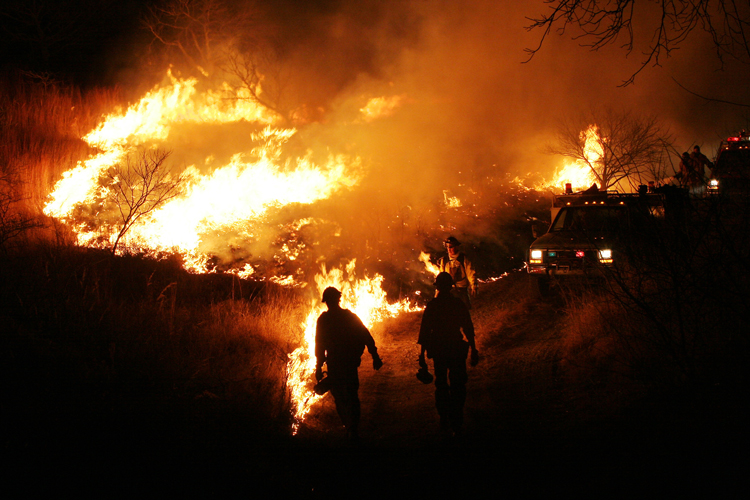
NSU's Master of Science in Disaster and Emergency Management is ranked #1 in the nation for interprofessional emergency management education. This fully online, 36-credit program prepares professionals to lead preparedness, response, mitigation, and recovery efforts across public, private, and nonprofit sectors.
Students learn from nationally recognized faculty and build direct connections with community organizations through hands-on practicums. Graduates leave with both the expertise and a professional portfolio to lead when it matters most.
Online, Flexible, and Built for Working Professionals
NSU's M.S. in Disaster and Emergency Management is offered fully online with evening courses, designed for working professionals. Students connect with community partners—including FEMA and local emergency response teams — to complete hands-on practicums and real-world service as part of the program's core mission.
What Is an Emergency Manager?
An emergency manager coordinates disaster preparedness, response,
mitigation, and recovery for communities, businesses, and government agencies. According
to the U.S. Bureau of Labor Statistics, employment of emergency management directors
is projected to grow 5% from 2023 to 2033, faster than the average for all occupations,
with
strong demand at the local, state, federal, and international levels.
Quick Facts

Visit the Tuition and Fees page for more information.


For Summer Admission: April 15
For Fall Admission: August 1


Understanding the dynamics of disaster management has equipped me to appreciate the importance of adaptability, leadership, and rapid decision-making in health care settings, which are crucial qualities sought after in medical professionals.
Silvia Cabal, D.O., M.S. | Disaster and Emergency Management Alumna

With NSU, I’m becoming a more effective leader for my community, my country, and the next generation of emergency managers.
Pablo Nieves Combat Medic, Firefighter Graduate Student, | M.S. in Disaster and Emergency Management

NSU’s M.S. in Disaster and Emergency Management has expanded my skill set in dealing with emergencies and everyday problems. It has taught me to plan ahead and anticipate problems before they occur. My employer has valued these skills by appointing me to the hospital’s emergency management committee. I was also elected to the board of directors for the regional healthcare emergency readiness coalition which covers all types of healthcare providers in our twelve-county region.
Tony Swicer, D.O., M.S. DEM, M.P.H. M.S. | Disaster and Emergency Management Alumnus

I developed a thorough grasp of disaster preparedness, mitigation, response, and recovery techniques through a multidisciplinary program. The curriculum ensured that I was prepared to lead and assist efforts to protect communities and save lives in the event of natural or man-made disasters by merging theoretical knowledge with volunteering practical abilities.
Susie Gilot, M.S. | Disaster and Emergency Management Alumna

The professors in the Disaster and Emergency Management Graduate Program are not only experts in their field but are also deeply passionate about what they teach. Their enthusiasm and dedication are contagious, making every class engaging and inspiring. One aspect that truly sets these professors apart is their eagerness to support students both inside and outside the classroom.
Samantha Pryde, M.S. | Disaster and Emergency Management Alumna
Why Earn Your M.S. in Emergency Management at NSU?
in real-world trainings, drills, and workshops.
Disaster and Emergency Management M.S. Curriculum
NSU's M.S. in Disaster and Emergency Management covers all-hazards prevention, response, mitigation, and recovery at the local, national, and international level. All students complete a core curriculum in emergency management theory and leadership, then select a specialty concentration in one of five tracks: public health, cybersecurity, criminal justice and law enforcement, environmental hazards, or maritime safety and security.
M.S. in Disaster and Emergency Management—Program Highlights
-
Ranked #1 in the nation for interprofessional emergency management education
-
36 total credits
-
100% online with evening courses
-
Complete in as few as 18–24 months
-
Five concentration tracks: public health, cybersecurity, criminal justice and law enforcement, environmental hazards, and maritime safety and security
-
Hands-on practicum with real community partners including FEMA and local emergency response teams
-
Application deadlines: December 15 (Winter), April 15 (Summer), August 1 (Fall)
-
Housed in NSU's Dr. Kiran C. Patel College of Osteopathic Medicine
-
Questions about the program? Cal Futterman, M.Ed., Assistant Director of Graduate Admissions, is here to help. Reach out at Cal Futterman, M. Ed. Assistant Director, Graduate Admissions or call (954) 514-0265.
Frequently Asked Questions about NSU's M.S. in Disaster and Emergency Management
Why should I choose NSU's M.S. in Disaster and Emergency Management?
NSU's M.S. in Disaster and Emergency Management is ranked #1 in the
nation for interprofessional emergency management education. Unlike
programs focused on policy or public administration, NSU's curriculum
is built around the full disaster management cycle — preparedness,
mitigation, response, and recovery — across healthcare, government,
nonprofit, and private sectors.
NSU's Disaster and Emergency Management program offers one of the most
flexible curricula available, with more than 30 courses and five
optional concentrations: public health in disasters, cybersecurity in
emergency management, environmental hazards, maritime safety and
security, and criminal justice. Students may also take up to six
credits from NSU's National Security Affairs or Master of Public Health
programs, and may have opportunities to participate in international
medical outreach experiences with a disaster management focus.
NSU's M.S. in Disaster and Emergency Management includes six required
core courses and six electives, giving students the flexibility to
build a degree that aligns with their career goals. This structure
supports a wide range of professional paths within the emergency
management field.
Students choose from five concentration tracks: public health, cybersecurity, criminal
justice and law enforcement, environmental hazards, or maritime safety and security.
Half of all coursework
is dedicated to the chosen concentration.
Yes. NSU's M.S. in Disaster and Emergency Management is delivered
100% online with no required on-campus attendance. Courses include
live Zoom sessions several times throughout the semester, providing
direct interaction with faculty and classmates while maintaining full
scheduling flexibility.
Tuition for NSU's M.S. in Disaster and Emergency Management is $687
per credit hour for the 2026–2027 academic year. The program is 36
total credits. Financial aid is available to students enrolled in at
least six credit hours per semester.
Yes. Students enrolled in at least six credit hours per semester are
generally eligible for financial aid. Enrollment can be adjusted
semester to semester based on personal needs, though taking fewer
courses may affect eligibility.
Yes. Most students in NSU's DEM program work full-time while enrolled.
Live class sessions are held in the evening and last approximately one
hour. Discussion boards, papers, and research projects can be completed
on your own schedule, making the program accessible for working
professionals.
Most students complete NSU's M.S. in Disaster and Emergency Management
in approximately two years, taking two courses per semester. Students
may adjust their pace based on personal and professional commitments,
with up to three years — nine semesters — allowed under university
policy.
No entrance exam such as the GRE is required for NSU's DEM program.
However, students without an qualifying exam score will be required to
maintain a 3.0 GPA for their first nine credits. A 3.0 GPA is required
for graduation regardless.
NSU's DEM students come from diverse professional backgrounds including
healthcare, emergency management, law enforcement, fire services,
military service, meteorology, public health, and government. This
diversity enriches class discussions and professional networking
throughout the program.
NSU's Disaster and Emergency Management courses combine live
interactive Zoom sessions with independent coursework. Classes are
discussion-based, focusing on real-world applications, case studies,
and lessons learned rather than traditional lecture-style instruction.
Students may transfer a maximum of 12 graduate credit hours into
NSU's DEM program if the courses were completed at the graduate level
with a grade of B or better within five years of matriculation.
Transfer requests require official transcripts, a course syllabus,
and catalog description, and must be approved by the DEM Program
Director in writing.
Some courses in NSU's DEM program require textbooks; others do not.
Many required texts are available electronically through the NSU
library at no additional cost. When electronic versions are
unavailable, students may need to purchase or rent materials.
Contact Cal Futterman, M.Ed., Assistant Director of Graduate
Admissions, at cf1095@nova.edu or call (954) 514-0265.
Questions about the program? Cal is here to help.

After Applying, What Happens Next?
Depending on the time of year, the review process may take a few weeks. You can check your application status at any time via the online application portal. Once a decision has been made, notification is sent via email to the address on file.